

-

Welcome to the LTOA website
The London Tree Officers Association (LTOA) constitutes the professional & technical voice for London's trees & woodlands Read More -

Become a Sponsor
The LTOA relies on subscriptions from its members and sponsorship to operate. Read More -

CAVAT
Capital Asset Value for Amenity Trees (CAVAT). CAVAT provides a method for managing trees as public assets rather than liabilities Read More -

How to Become a Member
Members can attend, for free, the the LTOA meetings which are held four times a year and cover a wide range of tree related matters. Read More
- 1
- 2
- 3
- 4


The London Tree Officers Association
Welcome to the LTOA website. The London Tree Officers Association (LTOA) constitutes the professional & technical voice for London's trees & woodlands. Its aim is to enhance the management of the Capital's trees.
We hope that you find the LTOA website both interesting & informative. If you have any questions, comments or suggestions, please do not hesitate to contact us.
LTOA seminar on Thursday 4 December
Thursday 4 December 2014 at LB Ealing
Agenda
09:30am - Tea & coffee
10:00am - Introduction by LTOA Chair Richard Edwards
10.05am - Update on the work of the LTOA by Becky Porter, LTOA Executive Officer
10.15am - A word from our sponsors of the day Simon Jones of Simon Jones Associates Ltd
10.25am - Natural England’s advice for ancient woodland and veteran trees, Richard Barnes of the Woodland Trust
11.05am - Questions
11.15am - Short break
11.25am - Trees and underpinning a marriage made in heaven or hell, Rob Withers of ASUC Plus
11.55am - Questions
12.05am - The work of the LTOA planning working party on conditions and validations, Jon Ryan, Chair of the LTOA planning working party and Tree Preservation Officer at LB Islington
12.15pm - Questions
12.20pm - Launch of consultation of LTOA publication Surface Materials around trees in the hard landscape, John Parker, Chair of the LTOA surface materials around trees working party and TfL Tree Officer
12.40pm - Questions
12.45pm - LTOA PR and Communications group – what they do and a call for members to join
12.50pm - Lunch in local pub sponsored by Simon Jones Associates
Thank you to Dale Mortimer at LB Ealing for hosting the meeting and for providing tea, coffee and biscuits and to Simon Jones Associates for the lunch.
Please note: this LTOA seminar is for LTOA members only. Please contact Becky if you want to attend: This email address is being protected from spambots. You need JavaScript enabled to view it.
Biosecurity - Managing the Threat to London’s Trees from Pests & Diseases
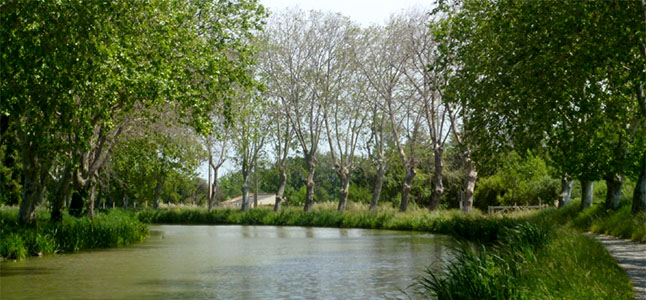
A key objective of the LTOA is to 'Improve the health, increase the extent and guarantee the resilience of London’s tree canopy'
Despite the many positive changes, and increases in awareness, understanding and practice in recent years in relation to our natural heritage and care for our environment, we are beset everyday by greater threats to the ecosystem we inhabit.
The LTOA is responsible for much of London’s tree population, a fundamental part of the environment, and the keystone species that support humans and wildlife and interconnect the entire city’s natural and physical processes, its water, soil and the very air we breathe.
We are increasingly informed about the importance of our tree canopy for air conditioning, and managing water, soil and drainage systems, the effectiveness of which is essential to the quality of urban living. The increasing risks of new pests and diseases to London’s trees, if unchecked, threaten the canopy and skyline as we know it today.
The prospect of such declines and losses places a clear responsibility on government, municipal managers, LTOA members and the public to invest in protecting our trees if we are to secure and enhance their contribution and continuity for the benefit of city life.
This position statement reflects current concern about a number of significant pest and diseases threatening the health of London’s trees, including:
- Acute Oak decline (AOC)
- Canker Stain of Plane (CSP) Ceratocystis platani
- Chalara Ash Dieback (CAD) Hymenoscyphus fraxineus
- Horse Chestnut Leaf Miner (HCLM) Cameraria ohridella
- Massaria Disease of Plane (MDP) Splanchnonema platani
- Oak Processionary Moth (OPM) Thaumetopoea processionea
Pests and Pathogens of London's Trees
The LTOA biosecurity working party has drawn up a matrix showing the pest and pathogens of London's trees. Listing pests / pathogens and species affected, diagnosis, prognosis, management and information links. Click on this link for the matrix.
Xylella Fastidiosa - Bacterial leaf scorch
Bacterial leaf scorch disease is caused by the bacterium Xylella fastidiosawhich affects a wide range of amenity tree species. It also affects economic hosts such as grapevine (as Pierce’s disease of grape) and citrus species (as citrus variegation chlorosis). In Europe, olive and almonds are the main crops affected. The pathogen has four known subspecies:fastidiosa, ssp. pauca, ssp. multiplex, and ssp. sandyi,each havingdifferent host ranges. The multiplexstrain is considered to pose the greatest plant health risk to the UK andcan probably infect the widest range of host plants, including Platanus(plane spp.), Quercus(oak spp.), Acer (maple spp.), Ulmus (elm spp.) and Ginkgo biloba(maidenhair tree). Afull list of confirmed hosts for EU outbreaks can be found on the EU CommissionXylellahost list.
Symptoms of X. fastidiosamanifest themselves differently in different host species, but the visible symptoms on plane, maple, oak and elm include leaf scorch, sometimes also with dieback of twigs and branches. The characteristic leaf symptoms which are visible in summer include browning at the leaf margins (but not along the main veins), and there is often a yellow edge (“halo”) to the browned areas. Scorched leaves tend to drop from the distal and not the basal end of the petiole, leaving bare petioles attached.Older leaves will have a "scorched" curled appearance while younger leaves at branch tips can appear healthy.Other symptoms include defoliation, shoot dwarfing, dehydrated fruits, irregular patches of brown and green tissue and reduced growth. Heavily infected plants may die within one or two years. A number of other disorders can produce symptoms similar to those caused by X. fastidiosa, including the fungus Guignardia aesculion Aesculus hippocastanum(horse chestnut),Dutch elm disease, anthracnose (Apiognomonia veneta)on plane trees and powdery mildew (Erysiphe platani) on young plane leaves.
In mid-October 2013 X. fastidiosawas detected in southern Italy. There are also known outbreaks of X. fastidiosain France (Corsica and mainland France), Germany and Spain (islands of Mallorca, Menorca and Ibiza and mainland Spain).
The bacteria are transmitted by insects which feed on plants' xylem fluid. There are several species of insects in the UK which could vector (spread) X. fastidiosa, including the common froghopper (Philaenus spumarius). Long-distance spread can occur by the movement of infected plants for planting.
The LTOA have been actively looking for symptoms of X. fastidiosaas part of the PZS Ceratocystis platanisurveys. As of February 2018 X. fastidiosahas not been positively identified in the UK.
Xylellais subject to EU emergency measures. The control strategy primarily aims to keep the bacterium out of the UK and other currently unaffected Member States if possible, although its large host range and complexity of symptoms make X. fastidiosaextremely difficult to detect. In the UK, pending landings of Xylellahost species, such as plane, elm and oak plants, must be pre-notified to the plant health authorities to enable inspection. X. fastidiosa is a quarantine organism so there is an obligation to report any suspect trees to plant health authorities.
Here’s a link to the Plant Health Portal high risk host list https://planthealthportal.
'LTOA Surface Materials around Trees in Hard Landscapes' consultation
Please find below a link to the LTOA Surface materials around trees in hard landscapes Draft Document, for consultation. We are seeking views and opinions about this document from our Membership and from specialists in other industries, such as highway engineers and urban designers. Comments should be sent to Becky Porter, LTOA Executive Officer, before Friday 30th January 2015. Feedback will then be collated and discussed by the Surface materials around trees in hard landscapes Working Party and agreed changes will be made accordingly.
Please note that this consultation draft does not feature any images; this is a review of content rather than presentation and appropriate images, tables etc. will be incorporated into the final document.
We look forward to receiving your responses.
Regards,
John Parker - Chair of LTOA Surface materials around trees working party
A message from Craig Harrison, Forestry Commission London Manager:
Chalara has been found in both planted young ash trees and in wider environment ash trees at sites near Rainham, Havering and Orpington, Bromley. These sites are all on the outskirts of London and adjacent to known chalara sites outside London, so the news does not come as a surprise and is in line with expected spread of chalara. The FCChalara website has a map showing the known distribution of Chalara including these latest findings; please note the map is based on positive results in 10km squares rather than specific sites.
Key messages are:
- Chalara has been known to be present for the last 2 years in the SE England area; it is spread by the wind; symptoms are more easily identifiable in the summer
- The FC has been actively surveying for it, so this development was expected; the disease is progressing much as expected; the FC will continue surveys to monitor the disease and offer management guidance to landowners
- Whilst there may be localised impact of Chalara, we do not expect it to have a major impact on the treescape of London
- Landowners should not panic about the latest findings or if they find chalara on their property; affected trees should be managed in line with normal tree management programmes i.e. monitoring and implementing treework only if appropriate.
- The best hope for the long term is in finding strains which are resistant to the fungus that can provide the future ash population; Forest Research are involved in this work
- Please refer to the FC website for information. There is also guidance on what to do in woodland and non-woodland situations; London specific guidance is being developed and will be published in due course


