

-

Welcome to the LTOA website
The London Tree Officers Association (LTOA) constitutes the professional & technical voice for London's trees & woodlands Read More -

Become a Sponsor
The LTOA relies on subscriptions from its members and sponsorship to operate. Read More -

CAVAT
Capital Asset Value for Amenity Trees (CAVAT). CAVAT provides a method for managing trees as public assets rather than liabilities Read More -

How to Become a Member
Members can attend, for free, the the LTOA meetings which are held four times a year and cover a wide range of tree related matters. Read More
- 1
- 2
- 3
- 4


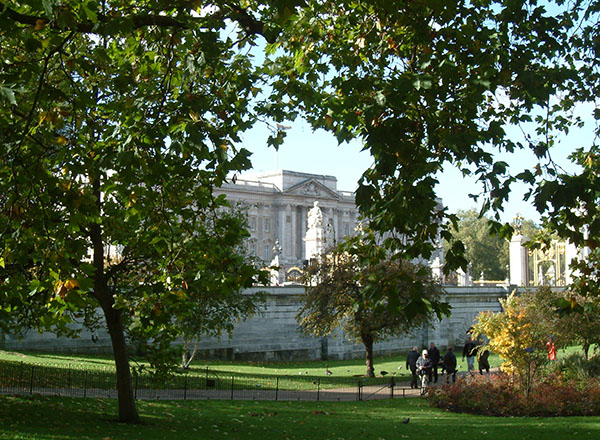
The London Tree Officers Association
Welcome to the LTOA website. The London Tree Officers Association (LTOA) constitutes the professional & technical voice for London's trees & woodlands. Its aim is to enhance the management of the Capital's trees.
We hope that you find the LTOA website both interesting & informative. If you have any questions, comments or suggestions, please do not hesitate to contact us.
LTOA seminar on Tuesday 7 October 2014
At London Borough of Redbridge
Agenda
9.30am - Tea and coffee
10:00am - Introduction from new LTOA chair Richard Edwards
10.05am - John Parker, LTOA working party chair, Surface materials around trees in the hard landscape
10.15am - Lars Schultz-Christensen, Arborist in Copenhagen, Tree Planting in Copenhagen
11:00am - David Houghton, Tree planting for subsidence
11.20am - Questions
11.30am - Short break
11.40am - Brian Crane, Brian Crane & Associates, Initial results from a long term study of the effects of root damage on street trees
12.25pm - Dave Lofthouse, LTOA working party chair, OSCCA (Open Source Canopy Cover Audit)
12.45pm - Questions
1.00pm - Lunch at local pub sponsored by Barcham Trees
Thank you to Christian Sheldon and LB Redbridge for hosting the meeting and for providing tea, coffee and biscuits and to Barcham Trees for the lunch.
Please note: this LTOA seminar is for LTOA members only. Please contact Becky if you want to attend: This email address is being protected from spambots. You need JavaScript enabled to view it.
The Mayor’s Street Tree Initiative 2014-2015
Street trees and sustainable drainage project call
 Boroughs are invited to submit innovative project proposals that deliver street trees combined with sustainable urban drainage systems (SuDS). This project is part of the wider Mayor’s Street Tree initiative, but requires a separate application for grant funding.
Background
During his first term the Mayor fulfilled a commitment to plant 10,000 street trees in London. Following the success of this initiative the Mayor has committed to plant an additional 10,000 street trees by March 2015. We have recently launched the third phase of the Mayor’s Street Tree Initiative working in partnership with the Forestry Commission and Groundwork London and welcome applications until 29th August 2014. Further details including guidance and application forms can be found here.
The GLA has also secured additional funding to support innovative projects that deliver street trees combined with sustainable urban drainage systems (SuDS). As a result we invite London boroughs to submit proposals for “trees+SuDS” projects by 19th September 2014, which will be delivered by March 2015.
Why trees+SuDS?
Surface water flooding is a problem in many urban areas that have a large area of impermeable surface, like London. It occurs when rainwater cannot soak into the ground and overwhelms the drainage system, forming puddles, pools and temporary flows. Some storms completely overwhelm our drainage systems and we experience flooding that can affect properties and livelihoods. Like many other cities London is promoting sustainable drainage, including the use of green infrastructure to help reduce surface water flooding. Urban trees and forests are recognised as an important and cost effective infrastructure to help reduce flood risk resulting from intense rainfall.
Boroughs are the Lead Local Flood Authorities (LLFAs) for London and have responsibility for managing flood risk from surface water, groundwater and watercourses. Each London borough will have a Surface Water Management Plan produced through Drain London, as required in the Flood and Water Management Act (2010). As SuDS Approval Bodies (SABs), boroughs will adopt and maintain approved SuDS that serve more than one property, as well as SuDS in highways.
Fund4Trees: Land's End to John O'Groats - Scotland update

Sunday (21st Sept) was a quiet flat route from Gretna on the A75/6 to Dumfries and Kilmarnock. It was good to have a rest from the constant throng of HGVs: many passing very close to my right shoulder!
Pressing on with a 117 mile ride found me in Paisley. Near on rabid with hunger I stumbled into the local Ben & Jerrys (not much else around) but unfortunately with gas off in the kitchen all they could offer was a bowl of soup....... KFC happy meal then!
Next day the first bike-ride-fright was mistakenly taking the Clyde tunnel in Glasgow. The dimly lite descent into the tunnel's bowel was like entering Hedes. There was no space to make mistakes in this clostrophobic tunnel but just cycle like hell to get out alive at the other end. Blood pressure returned to normal passing Dumbarton on the A82 along the side of Loch Lochmon. Beautiful.
Had a result with Crianlarich overnight stay in the form of a free night at the Best Western as long as I had meal. Get in. At the next local school (Crianlarich Primary) tree planting a seven year old pupil even knew the 'P' word! Bless how informed these youngsters are. By now I was beginning to feel pumped with the finish line in my grasp. But the challenge of the Highlands awaited. A thigh pumping 2.5mile ride up on to the windswept Rannoch Moor took me in sight Glencoe. 'Twas a grey drizzly moody day and I felt like a mere spec in this isolated mountainous landscape. At Fort William alas Ben Nevis was heavily cloaked in low cloud. Cold and a little damp I arrived in Fort Augustus: at the southern tip of Loch Ness.
Next day the tree planting at Kilchuimen School went well with a great group foto under their tree thought poster. Another tailwind along the Loch sped me to Inverness where a copper beech was planted with the head (Convener) of the Highland Council: Cllr Jimmy Gray. Many thanks to Robert Patton and team at Inverness Council for organising this.
Just north of Inverness the A9 headed north into the Sutherlands another beautiful landscape with rolling heather covered hills on one side and the expansive North Sea (with numerous oil-rigs) on the other. Second bike-ride-fright was free-wheeling at 40mph down into the fishing village of Brora. If falling off the bike and skidding along the bridge hadn't killed me then the 50ft drop off the bridge would have! Next day (26th Sept) even though Keiss Primary School was closed, on an in-service day an impressive number of pupils, parents and teachers showed to see the English man and his tree-clad iron horse. With tree planted it was job done: all eleven school from Cornwall to Scotland visited. Just the last 17 miles remained to the tikka tape of John O'Groats. A vicious cross wind meant angled an cycle ride but steering north provided a tailwind that blew the iron horse clear into the Bike Britain finish line. Must confess felt a little emotional having foto taken at the famous post and touched that the couple who obliged with camera gave me a £6.00 donation.
Closing thoughts. What does it take to finish a solo unsupported 1,000 plus mile End2End cycle ride. Well, 300,000+ pedal strikes, dogged determination, a shed-load of grit and the desire to take on the chin every hill thrown at you ! The eleven schools were great & the approx switched-on 2,000 kids even better. Personally, after three months of planning, preparation and training I feel very relieved, emotionally tanked-up & just a tad proud !
Many thanks to those along the route who put me up, to Coles Nurseries for the trees and to Robert Pattton & team for organising the Inverness planting.
..... What's next ? Abseiling off the Europa hotel in Belfast.... watch this space :)
Russell Ball - Fund4Trees - Founder & Trustee - This email address is being protected from spambots. You need JavaScript enabled to view it.
i-Tree Canopy
The LTOA’s Canopy Group was set up in 2011 to carry out surveys, and encourage boroughs to assess, tree canopy across the city by means of the i-Tree Canopy tool. This works by sampling aerial photosets and allocating ground cover or land utilisation types as determined by the surveyor.
The Canopy Group carried out full detailed surveys for the whole city and a number of individual participating boroughs – and from this gained percentage tree cover figures and percentages of other categories of use and cover based on very high sample point numbers leading to low margins of error according to the programme providers.
However there were problems presented by the use of Bluesky aerial photosets in use with the i-Tree Canopy programme which led the LTOA to decide on the rapid creation of an alternative tool which could be used in conjunction with Councils’ in house GIS systems such as Mapinfo and Arcview. This was developed in a very short period by Jonathan Robinson of LB Hackney and enabled a number of further studies but with the resolution of the problems over Bluesky photography it has been found more appropriate to revert to i-Tree Canopy.
As a result the OSCCA tool has been withdrawn and the programme notes removed from the website and archived, though we view this as an example of the LTOA’s constant attention to the pressing needs of our members and the Green Infrastucture/Urban Forest profession in general.


