

-

Welcome to the LTOA website
The London Tree Officers Association (LTOA) constitutes the professional & technical voice for London's trees & woodlands Read More -

Become a Sponsor
The LTOA relies on subscriptions from its members and sponsorship to operate. Read More -

CAVAT
Capital Asset Value for Amenity Trees (CAVAT). CAVAT provides a method for managing trees as public assets rather than liabilities Read More -

How to Become a Member
Members can attend, for free, the the LTOA meetings which are held four times a year and cover a wide range of tree related matters. Read More
- 1
- 2
- 3
- 4


The London Tree Officers Association
Welcome to the LTOA website. The London Tree Officers Association (LTOA) constitutes the professional & technical voice for London's trees & woodlands. Its aim is to enhance the management of the Capital's trees.
We hope that you find the LTOA website both interesting & informative. If you have any questions, comments or suggestions, please do not hesitate to contact us.
An LTOA response to ‘Avenues of trees raise risk of air pollution’

Research from academics at Bangor University has suggested that avenues of trees on urban streets can damage the health of pedestrians by trapping air pollutants beneath their canopy. It warns that the effect could be so bad on streets with slow-moving traffic that councils should consider chopping down trees.
The above was the result of an item in ‘The Conversation’ which bears very little relation to any actual state of affairs in London - click here
A photo shows an avenue of trees, looking very much like a park. Clearly no vehicles are permitted. The avenue is lined with benches. The caption says ‘a tree canopy looks nice but where is the air pollution supposed to go’. What pollution? The fact of trees cleaning the air by deposition of pollution would suggest the opposite in this case – that the presence of trees would be keeping pollution out.
As a matter of fact the negative canyon effect is well known, the benefits of tree lined streets well documented, and the presence of such tree lined canyons in our built environment fairly rare – although, to be fair, the building bonanza in London is now creating canyons irrespective of the presence of trees. Tree Officers, in London as elsewhere, are aware of the need to take into account all aspects of what trees deliver – good and bad – and have done for years.
There is no new debate on this. The main failing of the contribution in ‘The Conversation’ is the very factor it purports to address – that of looking at one part of a highly complex equation in isolation. Tree Officers have for years dealt with the competing demand for shade and demands for light. We know that species such as the Birches may be the very best at capturing roadside particulates but may not be suitable for a host of other reasons. That Oaks and Willows produce VOCs. Willows are almost never and Oaks seldom planted in streets – but if you want rapid growth or rich bio-diversity, these are some of the trees you need.
The argument about trees trapping pollution at street level also ignores the temperature reductions gained in tree lined streets and strangely even ignores simultaneous removal of pollution by deposition – bizarrely leaving the impression that trees are responsible for pollution.
It is suggested that trees ‘are like walls or cars’ in preventing circulation of air. They are of course nothing of the sort. Almost any vegetation has some porosity and deposition on plant surfaces is known to be many times more ‘probable’ than on manufactured surfaces - concrete, glass and car bodywork.
It’s also true that tree officers in the UK have to consider the weather. Not simply the fact that our urban climate is becoming more and more like an arid Mediterranean one at times but also that the UK is one of the windiest corners of Europe. Practitioners such as our members would dearly love to see the ‘Canyon’ studies applied to conditions in July 2015 – seemingly one of the windiest summer months for years.
It is alleged that it is the job of ‘urban planners and local authorities to ensure trees are not just planted where they look nice’. It might be useful to recognise the fact that between 60 and 70% of our trees are in the private sector with fairly minimal governmental control – a last hint that when discussing the benefits and dis-benefits of trees its best to look at the whole picture and not focus on one little bit. After all, that’s what research is all about!
The role of the LTOA is to enhance the management of the Capital's trees & woodlands. The environmental, social, economic, health and wellbeing benefits of trees are well documented and we would like to ensure that a clearer picture is given which has been well researched and published.
We would draw your attention to a publication by the Woodland Trust and its references - Urban Air Quality Report (April 2012) prepared by Mike Townsend of the Woodland Trust with the assistance of Dr Tom Pugh and Professor Nick Hewitt, both of Lancaster University, and Professor Rob MacKenzie of the University of Birmingham - click here
The above article is the full response given to Horticulture Week and used in their article 'Report suggests large -canopied street trees can exacerbate pollution', 21 August 2015, http://www.hortweek.com/report-suggests-large-canopied-street-trees-exacerbate-pollution/landscape/article/1360654.
Written by Dave Lofthouse on behalf of the London Tree Officers Association
Dip. Arb. (RFS) M.Arbor.A.
Arboricultural Manager, Greenspaces
London Borough of Merton
Tree-lined Routes & the Linear Forest

Tree-lined routes across the terrestrial ecosystem connect urban and rural landscapes, roads and rivers, canals and railways which, when considered together, make up the linear forest. They conserve nature, clean the air, sequester carbon and promote health and wellbeing, right where we deliver pollutants. A novel appreciation of these integrating services equates to a new environmental discipline.
- How can we understand the full potential of these linear treed landscapes as green lungs, ecosystems, aesthetic heritage and economic assets?
- How can we develop a correct appreciation that can inform local, regional, national and trans-national policies?
- How do we develop these natural assets as resilient, proactively-managed national assets that are properly interconnected and no longer vulnerable to short-termism and subjective risk aversion?
This seminar offers a dynamic exchange between European colleagues. On the Continent, an integrated approach to tree-lined routes and linear forests is being pioneered by a number of inspired initiatives including from Poland, Germany, France, the Czech Republic and others. Never before has this carefully crafted group of people met together to discuss this vital subject. Here is a rare opportunity to meet with experts in the field, brought together at this prestigious venue by Neville Fay, founder of the Treework Seminar Series. Forging common links points to a wider, cross-cultural, integrated model for disciplines to cross-pollinate and collaborate. Our seminar aims to unpick sectoral interests and compartmentalised thinking. By sharing information and knowledge about natural resources, carbon sequestration, pollutant removal, flood management, economic and tourism benefits and forest production-potential, we lay a new foundation for what constitutes the national and European linear forest for the 21st century.
London Tree Officers Association – Position statement OPM 2015
Introduction
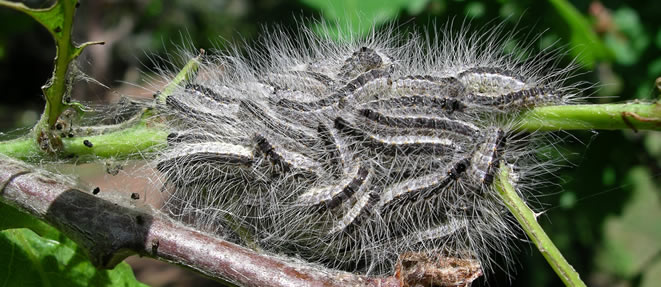
The LTOA and Tree Officers have been involved with the control / eradication of Oak Processionary Moth (OPM) since it was first identified in London in 2006. In 2010 the LTOA published their Guidance Note on OPM.
The LTOA has worked closely with the Forestry Commission (FC) and its partners, engaged with the Advisory Group and maintained its own OPM Working Party. With the current programme review and the possibility of the ending or downgrading of FC control, the LTOA feels it is time to restate its views on the OPM issue.
The LTOA members who wrote this statement are: Richard Edwards (LB Croydon, LTOA Chair), Craig Ruddick (LB Richmond) and Dave Lofthouse (LB Merton, LTOA Executive Committee member).
TPBEII Proceedings: A Milestone for Research on Urban Trees and Green Infrastructure
 Proceedings from the 2014 Trees People and the Built Environment II (TPBEII) conference, the international urban tree research event, have been published, marking a milestone in the development of our urban forests and green infrastructure. Some of the key themes covered in the publication include the environmental, economic and social benefits of urban trees and woodland, featuring research and case studies from around the world.
The TPBEII publication contains papers from leading international academics in the fields of urban forestry, greenspace design and sustainability. These include Prof Roland Ennos, Professor of Biological Sciences at the University of Hull, Prof Herbert Girardet, Co-Founder of The World Future Council, and Dr Kathleen Wolf, Research Social Scientist, University of Washington.
A sample of the topics covered in this publication are:
- Creating Regenerative Cities (H Girardet)
- Million Trees Los Angeles: Carbon Dioxide Sink or Source? (E G McPherson, A Kendall and S Albers)
- Planting ‘Post-Conflict’ Landscapes: Urban Trees in Peacebuilding and Reconstruction (L D Shimada and M Johnston)
- Invest From the Ground Up! The Benefits and Economics of City Trees and Greening (K L Wolf)
- How Useful are Urban Trees? The Lessons of the Manchester Research Project (R Ennos, D Armson and M A Rahman)
Hosted by the Institute of Chartered Foresters (ICF) on behalf of the Conference Steering Group of over 20 partner organisations, TPBEII was a two-day urban trees event that took place 2-3 April 2014, at the University of Birmingham. The event attracted over 400 delegates, providing a forum for collaboration between the wide range of different sectors involved with greenspace design, construction and management.
Discussing the relevance of the conference proceedings, Dr Mark Johnston MBE, Chair of the Conference Steering Group, said:
“The publication of these TPBE II conference proceedings represents a milestone in research on urban trees and green infrastructure. But most importantly this research will soon have an impact where it really matters – making a genuine difference to people’s lives on the ground in our towns and cities.”
The TPBEII proceedings have been published by the conference host, ICF. Visit http://www.charteredforesters.org/tpbeii-proceedings/ to download a copy, or lulu.com, where printed copies can be purchased.


