

-

Welcome to the LTOA website
The London Tree Officers Association (LTOA) constitutes the professional & technical voice for London's trees & woodlands Read More -

Become a Sponsor
The LTOA relies on subscriptions from its members and sponsorship to operate. Read More -

CAVAT
Capital Asset Value for Amenity Trees (CAVAT). CAVAT provides a method for managing trees as public assets rather than liabilities Read More -

How to Become a Member
Members can attend, for free, the the LTOA meetings which are held four times a year and cover a wide range of tree related matters. Read More
- 1
- 2
- 3
- 4


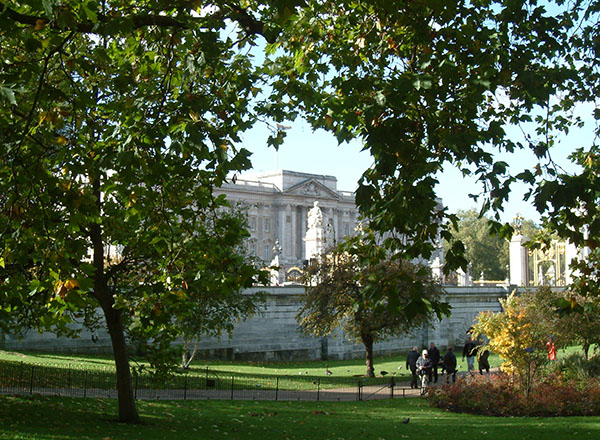
The London Tree Officers Association
Welcome to the LTOA website. The London Tree Officers Association (LTOA) constitutes the professional & technical voice for London's trees & woodlands. Its aim is to enhance the management of the Capital's trees.
We hope that you find the LTOA website both interesting & informative. If you have any questions, comments or suggestions, please do not hesitate to contact us.
Natural Capital Investing in a Green Infrastructure for a Future London

A Green Infrastructure Task Force Report Prepared by the Greater London Authority on behalf of the Green Infrastructure Task Force. This is about a a vision for the Green Infrastructure of the future city. A high quality and well-maintained green infrastructure is integral to keeping the city healthy, happy, moving and functioning.
By 2050, all neighbourhoods will be able to benefit from, enjoy, and take pride in London’s green infrastructure.
The value of London’s trees is proven in ground breaking report

The benefits that all of London’s trees provide have been given a monetary value in the London i-Tree Eco Project report published yesterday. The quantity of these benefits – such as air quality improvement and carbon storage – is the result of the world’s largest survey of a city region involving hundreds of trained volunteers.
Most people appreciate the beauty of London’s trees but may not know, or tend to take for granted, the benefits that London’s urban forest provides for both people and nature. The i-Tree report, sponsored by Unilever, gives us a much better understanding of the structure and value of London’s urban forest. It is a method that is recognised worldwide and enables comparison with other cities. The information produced enables us to make better plans to manage London’s trees and highlights the need for continued tree planting to increase tree canopy cover over London.
The survey found that:
- Each year London’s trees remove 2241 tonnes of pollution worth £126m per year. Air pollution is a major issue for London and the contribution made by trees to its reduction has a direct positive impact on public health and is – literally - life saving.
- Each year London’s trees intercept rainfall and prevent nearly 3½ million cubic metres of water from entering the drainage system and so, reducing the risk of flooding and water pollution events. This is the equivalent of 1365 Olympic swimming pools with a monetary value of £2.8m per year.
- London’s trees store 2.4 million tonnes of carbon and they sequester carbon dioxide from the atmosphere to reduce the impact of climate change. This is equivalent to the carbon produced from 26 billion vehicle miles.
The report highlights that there are a wide range of tree species - not just native trees but trees from around the world - that are suited to London conditions. However, at a more local level there are vulnerable landscapes that are currently reliant on one or two tree species, such as some parts of central London dominated by the iconic London plane. In order to reduce the risk of large numbers of trees being lost within a short time, planting of a wider species range is needed.
The report calls for everyone to recognise and support the multiple benefits that trees provide for London and to make their own contribution to protecting and enhancing London’s tree cover. This will help ensure that London continues to be a green city for future generations by planting trees in gardens, supporting tree planting by others, supporting organisations that promote and protect London’s trees.
Environment Minister, Rory Stewart, said: “Our trees and forests have long been central to British identity. But we are beginning to understand with even more precision, just how important they are to our air quality, our health and our happiness. This is a fantastic initiative. And it sits very well alongside our drive to plant an additional 11 million trees in this parliament, and to support green spaces across the country.”
Charlotte Carroll, Unilever UK Sustainability and Communications Director, commented: “The findings of this report provide clear evidence of the importance of trees in the fight against climate change and of their value to our society in helping to deliver a more sustainable future. At Unilever we're working on this important issue through our brightFuture movement and with the UN Climate Conference, COP21 in progress, now is the time to engage in the importance of trees in our everyday lives.”
The Mayor of London, Boris Johnson said: “London is one of the greenest, leafiest cities on the planet and as this survey proves, our canopy does a ‘tree mendous’ job of lowering pollution, alleviating flood water and boosting our environment.”
Craig Harrison, Forestry Commission London Manager said: “The i-Tree report shows some of the ways in which London’s trees enhance our daily lives, and many of the trees we enjoy today are the legacy of past tree planting. But London’s trees face challenges such as development pressures, climate change and disease. With the expected increase in London’s population the need for more trees will increase - so we need to protect existing trees and plant new trees - to ensure London remains an enjoyable place to live, work and visit”
London iTree survey - The report is available from:
Canker stain of plane
New canker stain of plane documents: Prevention and Outbreak
The London Tree Officers Association (LTOA) is pleased to announce the publication of two new guidance documents relating to canker stain of plane (CSP, Ceratocystis platani).
The first is called Canker stain of plane: A guide to prevention and is a brief reminder for tree officers and contractors of the importance of biosecurity in the fight to prevent Ceratocystis from entering the UK.
The second is called Canker stain of plane: Dealing with an outbreak. This document is designed to inform and support tree officers and others working in the arboricultural industry should Ceratocystis be confirmed as having arrived in UK. It is a brief, practical document intended to bring relevant information together into once place and ensure that in the event of an outbreak in the UK we are well-placed to eradicate the disease before it becomes established.
Both documents have been influenced by the excellent work of the Forestry Commission, including the Keep it Clean campaign and the Ceratocystis platani Contingency Plan.
Ceratocystis platani is a fungal pathogen which affects the genus Platanus and causes infected trees to die. It is spread predominantly by contaminated equipment being used on uninfected trees, although it can also be transported via root grafts.
Since October 2014 the UK has held EU Protected Zone Status (PZS) for Ceratocystis, requiring robust controls relating to importations of plane trees and ensuring that planes can only be imported from other areas which have been designated free of the disease. PZS surveys for CSP are carried out annually in the UK.
The LTOA, under contract to the Forestry Commission, has been carrying out these surveys in Greater London since 2013. At the current time it is not believed that Ceratocystis is present in the UK. The definitive UK Ceratocystis text Detecting and identifying canker stain of plane, by Lucio Montecchio; revised and updated by Neville Fay and John Parker, is available from the LTOA (www.ltoa.org.uk) or Treeworks Environmental Practice (www.treeworks.co.uk).
Detecting and identifying canker stain of plane
The LTOA has become a UK partner in the new Euphresco project Identification of Cryphonectria and Ceratocystis spp. occurring on sweet chestnut and Platanus spp.
We have also set up a new CSP working party made up of 8 LTOA members which will be looking at drawing up guidance for tree officers and contractors.

The LTOA – in association with Treework Environmental Practice – has released a new industry publication: Detecting and identifying canker stain of plane. This 48-page A5 colour booklet contains all of the essential information about canker stain (Ceratocystis platani) and should be regarded as essential reading for anyone interested in finding out more about the disease.
It includes chapters detailing morphology and infection strategies, movement and spread, symptoms, practical survey tips, sample collection and fungal identification, the UK and Italian methods of prevention and control and a comprehensive list of references and further reading. The text is accompanied by colour photographs on almost every page and drawings/diagrams to assist identification and diagnosis.
The booklet was authored by international expert in Ceratocystis platani Professor Lucio Montecchio, of De Rebus Plantarum at the University of Padua. This 2nd edition English-language version has been revised and updated by John Parker of the LTOA and Neville Fay of Treework Environmental Practice to include additional material relevant to the UK situation, including the methodology and results of the LTOA Protected Zone Status surveys for Ceratocystis in 2014, 2015 and 2016.
Since 2014 the LTOA has been leading on monitoring plane trees in London for the presence of canker stain, working closely with the Forestry Commission, Forest Research and several tree officers and managers to survey thousands of trees across the capital to meet the requirements necessary to retain Protected Zone Status This ensures that plane saplings can only be imported into the country from other areas which have been confirmed as being free of the disease.
The LTOA has developed considerable expertise in the subject and in October 2016 was confirmed as the UK partner in a new pan-European Euphresco project – Identification and early detection of Cryphonectria parasitica and Ceratocystis platani occurring on trees in Europe.
Copies of the booklet are priced at just £5 and are available to purchase from the LTOA.
Some example pages are available here
Please contact This email address is being protected from spambots. You need JavaScript enabled to view it.
LTOA elect new Executive Committee
The London Tree Officers Association (LTOA) has announced the election of a new Executive Committee to head up the association for the next two years. The Executive Committee was elected by the members of the LTOA and will continue to promote urban forestry and represent tree officers in London and beyond. For full details of the LTOA and short biographies of the Executive Committee please visit http://www.ltoa.org.uk/about-the-ltoa/the-executive-committee.
The new Chair of the Executive Committee is John Parker (Transport for London) and the Vice Chair is Barbara Milne (City of Westminster). The other members of the Committee are Andy Tipping (Barnet), Clare Pappalardo (Haringey), Colleen O’Sullivan (Camden), Craig Ruddick (Richmond), Dave Lofthouse (Merton), Gary Meadowcroft (Southwark), Jake Tibbetts (Islington), Lawrence Usherwood (Brent), Oliver Stutter (Southwark) and Richard Edwards (Croydon).
John Parker, new Chair of the LTOA, said “I believe that a healthy population of urban trees is best achieved through a healthy population of urban tree officers. Over the next two years the Executive Committee will continue to ensure that the LTOA provides representation and support to our members and to tree officers everywhere. We will continue to offer high-quality professional publications and seminars and will also seek to build stronger relationships across the UK and internationally, particularly with our friends and colleagues in Europe.”
For more information please contact Becky Porter, Executive Officer on 07771 976238 or email This email address is being protected from spambots. You need JavaScript enabled to view it. or visit www.ltoa.org.uk.


